Ten States for One Number
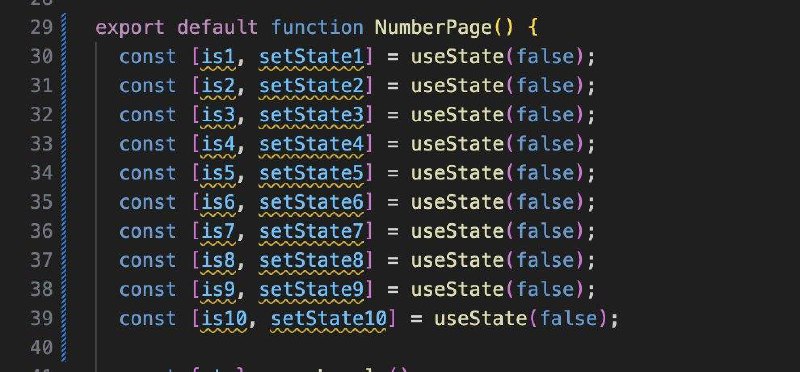
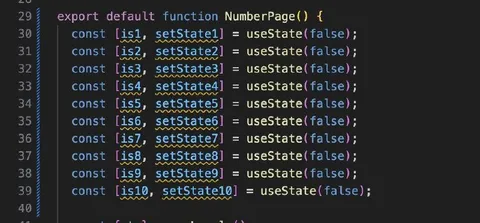
export default function NumberPage() { const [is1, setState1] = useState(false); const [is2, setState2] = useState(false); const [is3, setState3] = useState(false); const [is4, setState4] = useState(false); const [is5, setState5] = useState(false); const [is6, setState6] = useState(false); const [is7, setState7] = useState(false); const [is8, setState8] = useState(false); const [is9, setState9] = useState(false); const [is10, setState10] = useState(false);
A dark-themed code editor shows a React function named NumberPage with ten separate boolean state variables, one for each number from 1 to 10. The joke is that instead of using a simple range check, the programmer creates individual state variables for every number, exaggerating inefficient or overcomplicated coding. It is typically shared as a reaction to unnecessarily verbose solutions. EN: A dark-themed code editor shows a React function named NumberPage with ten separate boolean state variables, one for each number from 1 to 10. The joke is that instead of using a simple range check, the programmer creates individual state variables for every number, exaggerating inefficient or overcomplicated coding. It is typically shared as a reaction to unnecessarily verbose solutions.
- @gentoomemes / 12744 2024-08-11
- Type
- image
- Size
- 800×372 · 77.1 KiB
- Mood
- саркастичный
- Language
- en
- Added