OpenJDK Base64 Memory Corruption
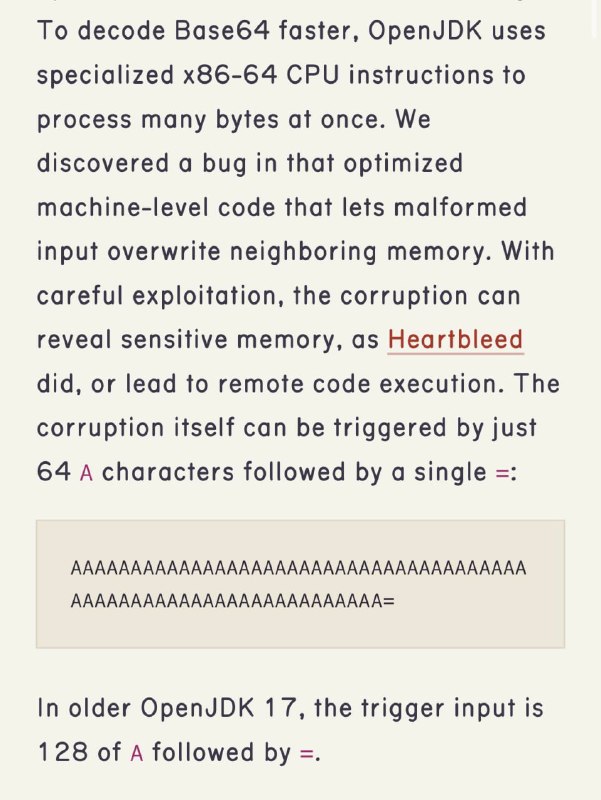
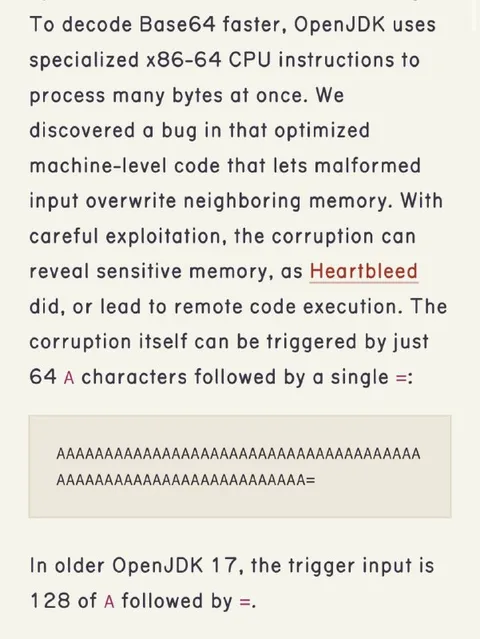
To decode Base64 faster, OpenJDK uses specialized x86-64 CPU instructions to process many bytes at once. We discovered a bug in that optimized machine-level code that lets malformed input overwrite neighboring memory. With careful exploitation, the corruption can reveal sensitive memory, as Heartbleed did, or lead to remote code execution. The corruption itself can be triggered by just 64 A characters followed by a single =: AAAAAAAAAAAAAAAAAAAAAAAAAAAAAAAAAAAAAAAA AAAAAAAAAAAAAAAAAAAAAAAA= In older OpenJDK 17, the trigger input is 128 of A followed by =.
A technical-looking screenshot explains a memory corruption vulnerability in OpenJDK's optimized Base64 decoder. The joke is the absurdly simple exploit trigger: a long string of A characters followed by an equals sign, contrasted with the serious language about Heartbleed and remote code execution. It can be shared as a reaction to comically fragile software or alarming security bugs. EN: A technical-looking screenshot explains a memory corruption vulnerability in OpenJDK's optimized Base64 decoder. The joke is the absurdly simple exploit trigger: a long string of A characters followed by an equals sign, contrasted with the serious language about Heartbleed and remote code execution. It can be shared as a reaction to comically fragile software or alarming security bugs.
- @ithueti / 19182 2026-11-18
- Type
- image
- Size
- 601×800 · 83.5 KiB
- Mood
- technical absurdity
- Language
- en
- Added