Rust Compiler Cries, Go Laughs
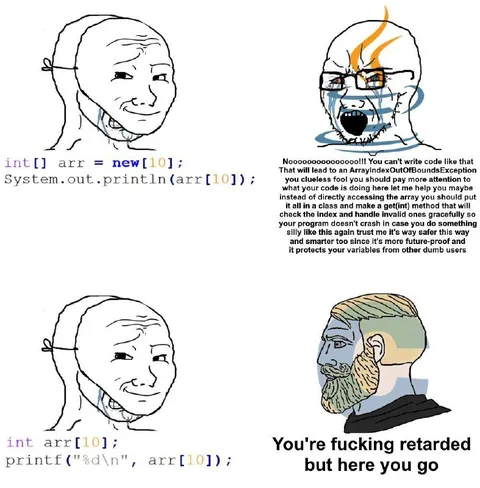
rustlang golang ident: existential_type_ident, semi_token: Token!(;)(Span::call_site()) vis: Visibility::Inherited, ty: Box::new(Type::ImplTrait(Type::Path( bounds: iter::once(TypeParamBound(return_type (method.sig.output ))) .chain( toplevel_lifetimes .iter() .cloned() .map(|lifetime_def| TypeParamLifetime(lifetime_def.lifetime)), ) .collect(); impl_token: Token!(impl)(Span::call_site()) type_token: Token!(type)(Span::call_site()) NOOOOOOOO!!!!!!! YOU CAN'T JUST SHARE MEMORY ACROSS THREADS WITHOUT A COMPILE-TIME PROOF OF MEMORY MODEL COMPLIANCE!!! YOUR PROGRAM WILL BE FULL OF DATA RACES!!! YOU'RE EXPOSED TO THE FULL LOAD-STORE REORDERING BEHAVIOR OF YOUR CPU ARCHITECTURE!! HAVE YOU EVEN READ MCKENNEY'S WHITEPAPER ON DEC ALPHA MEMORY BARRIERS NOOOOOOOOOOOOOOOOOOOO haha garbage collector go brrrrr
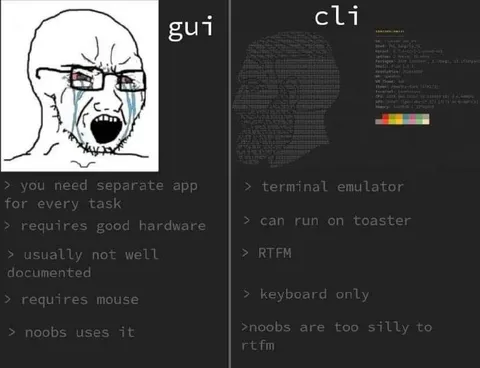
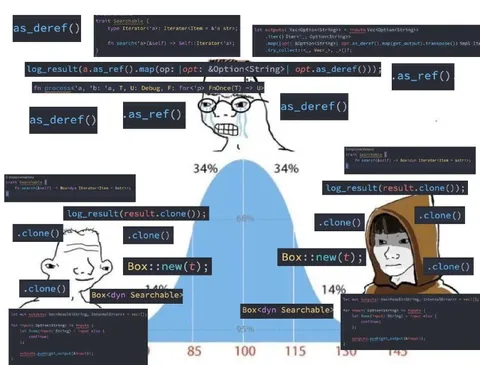
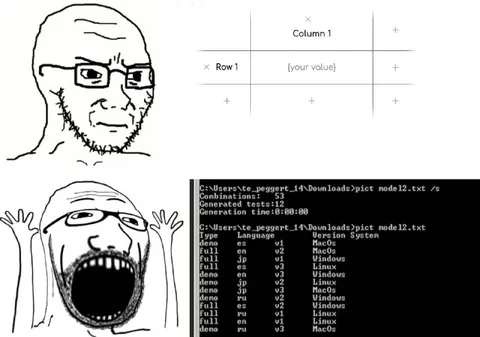
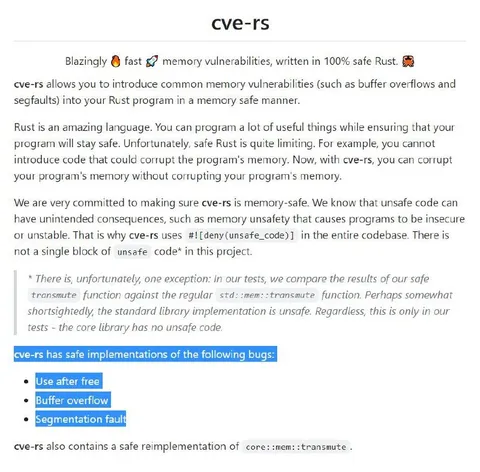
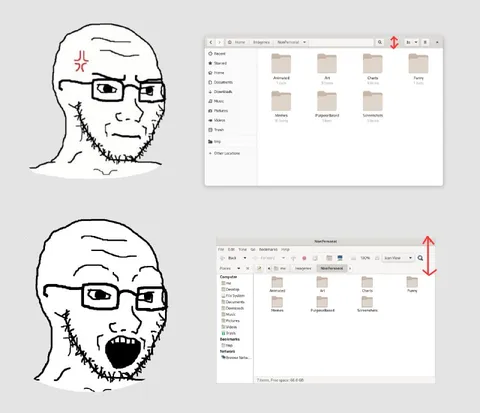
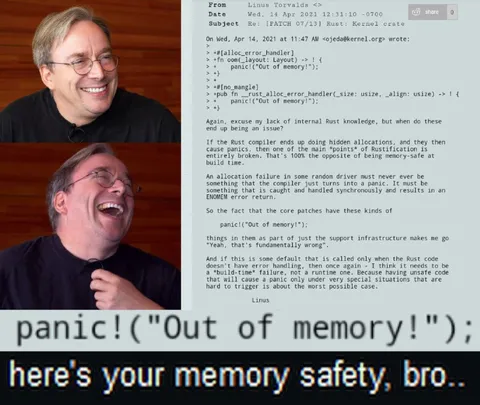
The meme contrasts Rust and Go using crying, glasses-wearing programmers. Rust panics over sharing memory across threads without compile-time guarantees and warns about data races and CPU memory reordering, while Go’s garbage collector responds with carefree confidence. It is used to joke about Rust’s strict safety checks versus Go’s simpler, more relaxed approach to concurrency. EN: The meme contrasts Rust and Go using crying, glasses-wearing programmers. Rust panics over sharing memory across threads without compile-time guarantees and warns about data races and CPU memory reordering, while Go’s garbage collector responds with carefree confidence. It is used to joke about Rust’s strict safety checks versus Go’s simpler, more relaxed approach to concurrency.
- @profunctor_io / 5101 2020-08-10
- @right_wing_dev_squads / 6612 2023-04-30
- Type
- image
- Size
- 800×497 · 74.7 KiB
- Mood
- sarcastic, absurd
- Language
- en
- Added